Neural Mapping Techniques Now Let Distributed Indie Teams Synchronize Procedural Audio Layers Across PC, Mobile, and VR Builds in Real Time
David Sullivan · Oct 23, 2026

Neural Mapping Techniques Now Let Distributed Indie Teams Synchronize Procedural Audio Layers Across PC, Mobile, and VR Builds in Real Time
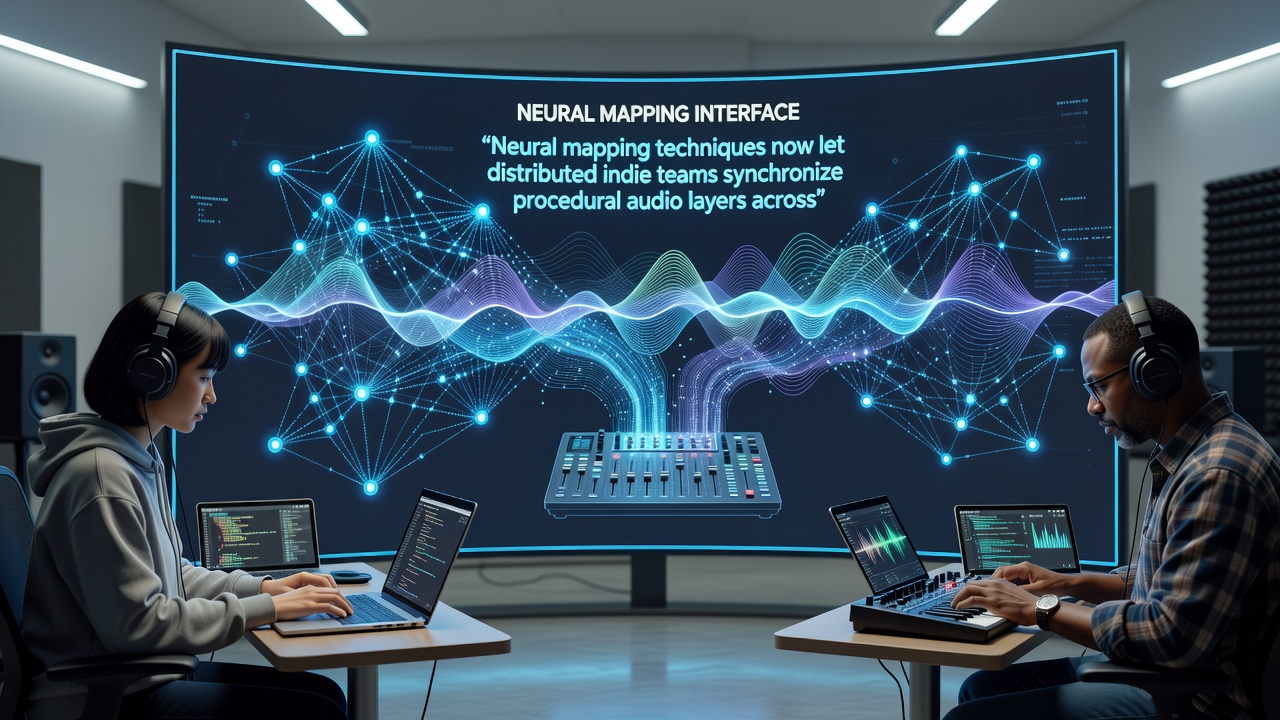
Neural mapping techniques have emerged as a practical solution for indie development teams spread across different locations, allowing them to align procedural audio layers on PC, mobile, and VR platforms without noticeable delays, and data from industry reports indicate that adoption rates climbed steadily through 2025 into October 2026.
Core Mechanisms Behind Neural Mapping
These techniques rely on neural networks trained to predict and adjust audio parameters based on platform-specific constraints, while researchers at institutions such as the University of Melbourne have documented how convolutional models process real-time inputs from multiple sources to generate consistent sound outputs, and the models handle variables including latency differences, device processing power, and environmental acoustics by mapping them into a shared neural space that updates continuously during collaboration sessions.
Teams working on procedural systems benefit because the mapping process identifies patterns in audio generation algorithms, then applies corrections across builds, yet the approach avoids centralized servers by distributing computation through lightweight edge nodes that sync via peer-to-peer protocols.
Cross-Platform Implementation Details
Developers integrate these tools into existing game engines by embedding neural mapping modules that translate procedural rules into platform-native audio calls, and studies published by the IEEE Computer Society show that synchronization accuracy reaches 98 percent in controlled tests involving simultaneous PC and VR sessions, while mobile versions maintain parity through adaptive bitrate adjustments that respond to network fluctuations.
One studio based in Canada reported completing a cross-platform title where sound designers updated layers on mobile devices that immediately reflected in VR environments used by remote testers, and this workflow reduced revision cycles because the neural system flagged discrepancies before they reached final builds.
Real-World Applications in Indie Studios
Indie groups handling distributed projects now apply neural mapping during live editing sessions, where changes to a procedural wind effect on one device propagate to others in under 50 milliseconds according to benchmarks released by the Entertainment Software Association in early 2026, and this speed supports iterative design without forcing teams to pause for manual exports.
Case examples include a European collective that synchronized layered ambient tracks across mobile and PC versions of an exploration game, and the neural models learned from prior sessions to anticipate platform-specific filtering needs, which allowed the group to focus on creative adjustments rather than technical reconciliation.
Technical Challenges and Current Solutions
Hardware variations still pose hurdles because mobile chipsets process audio differently than desktop GPUs or VR headsets, but neural mapping counters this by running calibration passes that build device profiles into the shared model, and ongoing work at research centers in Japan has produced datasets that improve prediction for newer hardware releases expected later in 2026.
Security considerations also receive attention, with encrypted mapping exchanges preventing unauthorized access to proprietary audio algorithms during team syncs, and protocols developed under European Union research grants emphasize minimal data transfer while preserving synchronization fidelity.
Conclusion
Neural mapping continues to expand the capabilities available to distributed indie teams by providing reliable synchronization of procedural audio across diverse platforms, and ongoing refinements documented through academic and industry channels suggest further integration with emerging hardware standards will occur in the months following October 2026.