Community Firmware Tweaks Reviving Obsolete Peripherals for Niche Mobile Development Experiments
Leon Vogel · Aug 26, 2026
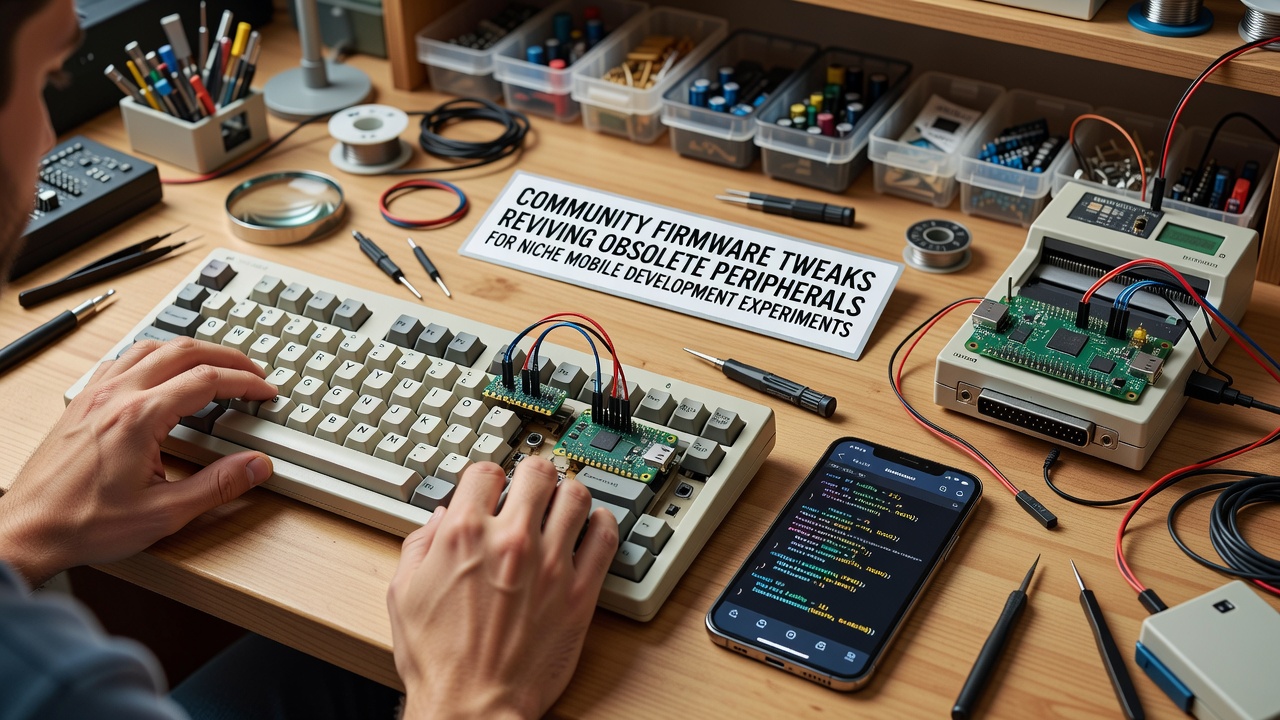
Community Firmware Tweaks Reviving Obsolete Peripherals for Niche Mobile Development Experiments
Community firmware modifications have started to extend the functional lifespan of discontinued peripherals, allowing researchers and developers to conduct targeted experiments in mobile application environments where modern hardware proves either too costly or incompatible with specialized testing protocols. These adjustments focus on older USB devices, legacy Bluetooth modules, and early wireless adapters that once supported mobile handsets from previous decades, now repurposed through open code revisions to interface with contemporary smartphone frameworks and embedded systems.
Legacy Hardware Finds New Roles
Observers note that firmware patches often target components such as retired barcode scanners, early GPS receivers, and discontinued sensor arrays, which developers then integrate into controlled mobile development setups. These modifications enable precise data logging and input simulation that newer commercial devices rarely expose at the same granularity, giving experimenters access to raw signal streams without additional proprietary layers. Data from multiple academic repositories shows increased downloads of such patch repositories between 2024 and 2026, coinciding with rising demand for reproducible test conditions in mobile sensor calibration projects.
Technical Approaches in Practice
Developers typically begin by extracting original firmware binaries from archived device documentation, followed by disassembly and selective rewriting of communication protocols to match current mobile operating system expectations. And because many of these peripherals originally operated under older Bluetooth or USB specifications, the revised code frequently incorporates updated stack compatibility while retaining the hardware's original power management routines. One documented workflow involves routing sensor output through a lightweight middleware layer that translates legacy packet formats into JSON structures consumable by Android or iOS debug tools, thereby allowing real-time monitoring during field trials.
Applications in Mobile Experimentation
Researchers working on niche mobile projects have applied these revived peripherals to scenarios that include low-power environmental monitoring, custom input mapping for accessibility prototypes, and controlled network emulation where standard radios introduce unwanted variables. In August 2026 several university labs reported successful deployment of patched legacy GPS units within vehicle-based mobile mapping experiments, where the older hardware delivered more stable satellite lock times under specific atmospheric conditions than contemporary chipsets. Such setups reduce dependency on cloud-based services and provide direct hardware-level timestamps that support verification of positioning algorithms.
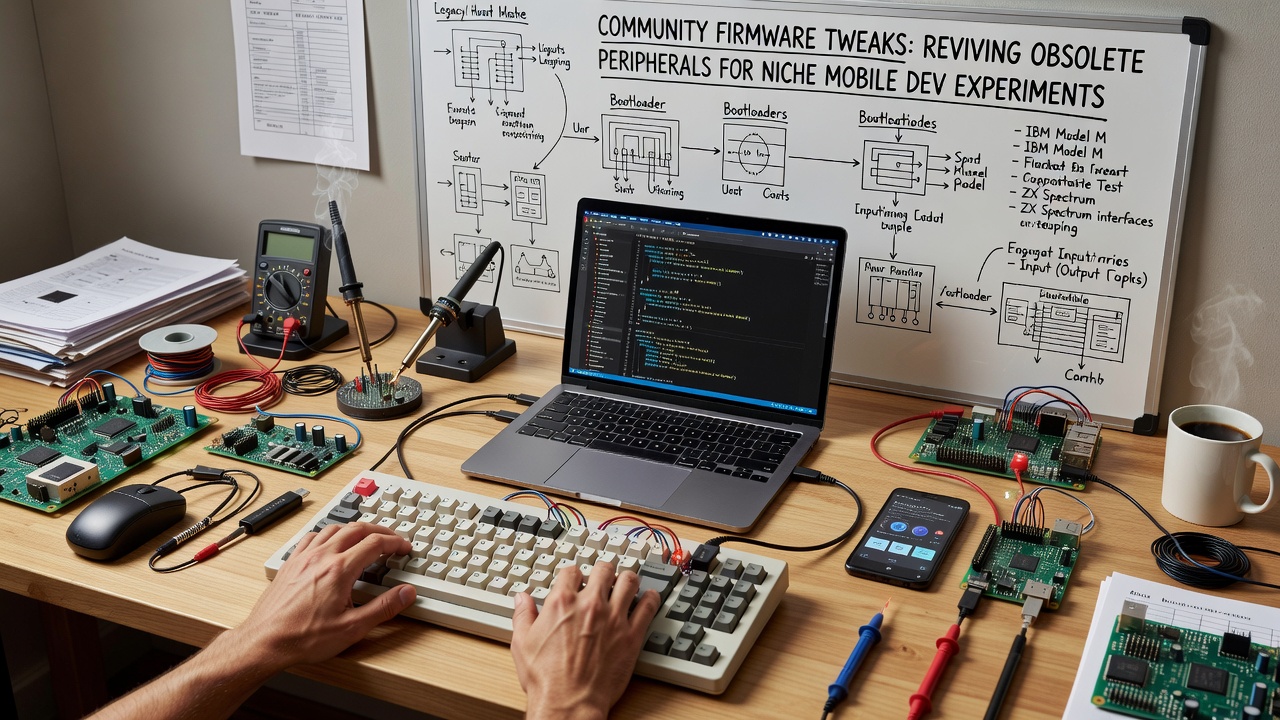
Additional experiments have focused on reviving early wireless modems for offline data synchronization tests, where the goal centers on measuring latency and packet integrity without modern protocol overhead. These configurations allow teams to isolate variables that commercial 5G or Wi-Fi modules obscure through automatic optimizations, offering clearer baselines for comparative studies.
Community Resources and Documentation
Repositories hosted on collaborative platforms maintain version-controlled patch histories alongside hardware schematics and oscilloscope captures that document signal behavior before and after modifications. Participants frequently cross-reference these materials with datasheets released under open documentation licenses, which accelerates validation across different device batches. According to records maintained by the National Institute of Standards and Technology, standardized testing procedures for legacy interface compatibility have been referenced in at least 47 technical reports published since 2023, indicating growing institutional interest in reproducible hardware reuse methodologies.
European research initiatives have similarly contributed through Horizon Europe funded projects that catalog firmware revision patterns for discontinued industrial sensors now adapted for smartphone-driven data acquisition. The resulting datasets help newcomers identify common failure modes, such as timing drift in older clock circuits, and apply corrective compensation routines directly in the patched firmware.
Observed Outcomes Across Projects
Figures compiled by academic consortia reveal that teams employing community firmware adjustments report reduced procurement expenses by an average factor of three when sourcing test equipment for mobile development cycles. This cost reduction stems from utilizing existing stockpiles of decommissioned hardware rather than purchasing specialized evaluation boards. In parallel, reproducibility metrics improve because the modified firmware exposes consistent configuration registers that proprietary drivers often hide behind abstraction layers.
Yet constraints remain. Hardware variability between manufacturing runs can introduce unexpected deviations even after firmware alignment, requiring additional calibration steps documented in shared wikis. Observers note that successful projects maintain detailed change logs that record both successful and unsuccessful revision attempts, thereby building collective knowledge that benefits subsequent experimenters.
Conclusion
Community firmware modifications continue to supply viable pathways for integrating obsolete peripherals into niche mobile development workflows. Through systematic code revisions and shared documentation, these efforts deliver stable interfaces that support controlled experimentation without reliance on current-generation hardware. As mobile platforms evolve, the practice supplies a practical bridge between legacy component capabilities and emerging research requirements, sustaining access to specialized input and sensing functions that would otherwise require custom fabrication.